
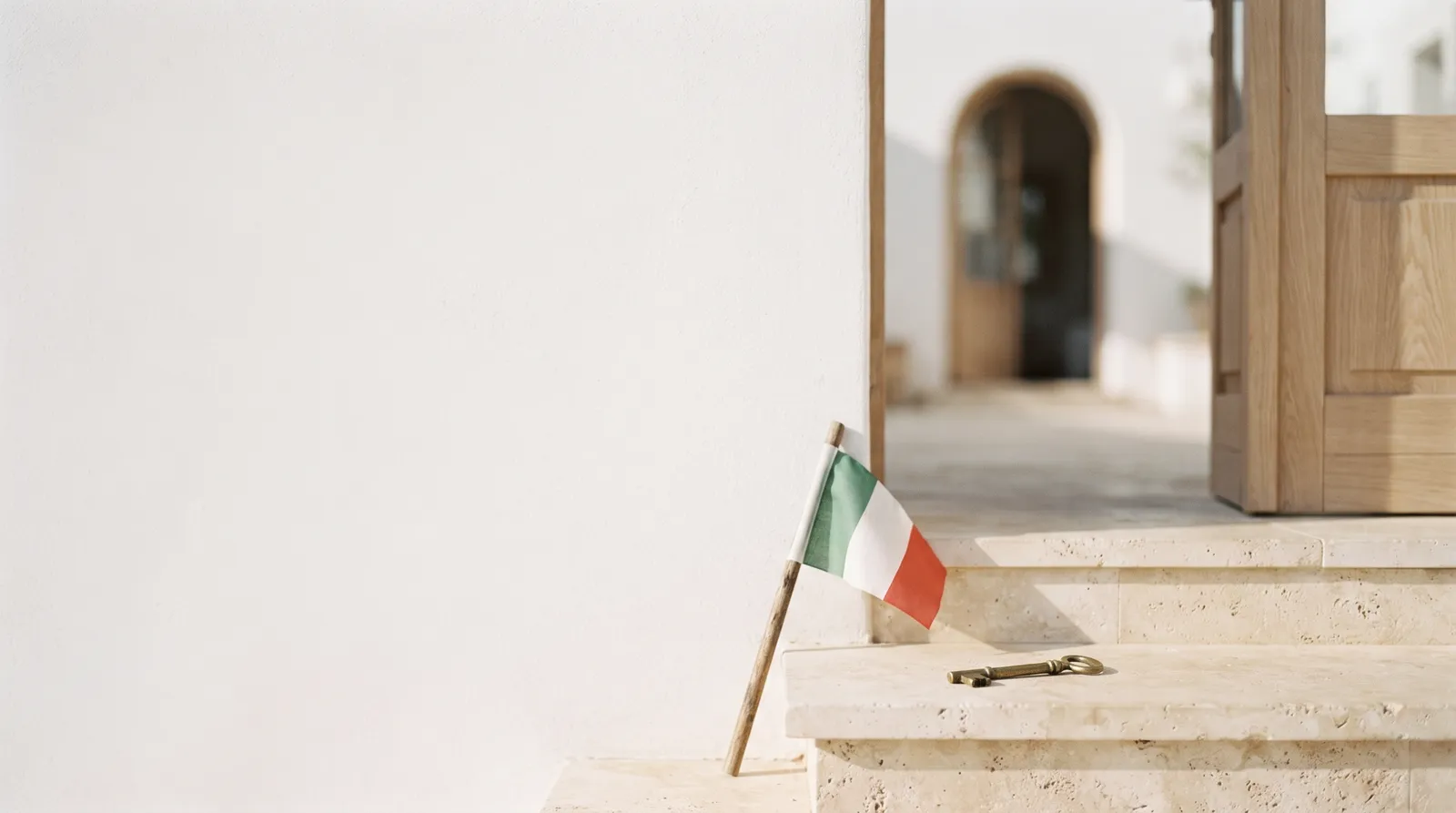
Italy attracts many Israelis: a country house in Tuscany, an apartment in a city, or an investment property. The purchase can look simple, but the transaction is governed by Italian law and by a registration and notary system that differs from the one we know in Israel. This article explains, from the Israeli side, what to check before you commit and which stages are worth knowing in advance.
It is important to stress: Italian law governs the transaction itself, so it must be reviewed by a local lawyer authorized to practice law in Italy. An Israeli lawyer assists you on the Israeli side, coordinates with the local lawyer and prepares your documents, but does not constitute a substitute for local legal advice.
First of all: who represents you
In transactions abroad it is common for a broker, developer or seller to offer "a lawyer we work with." For the representation to be independent, it is worth clarifying in advance:
- Who pays the lawyer and how much, and what the service includes: checks, contract review, accompanying the signing and registration.
- Which languages the lawyer works in, and how progress reports will be sent to you.
- What additional costs to expect. Get a written and current breakdown before committing.
The role of the notary in Italy
In Italy the notary plays a central role in a real estate transaction. The deed of transfer is usually signed before the notary, who is responsible for certain checks and for the registration process. It is important to understand that the Italian notary is a public official acting under local law, and does not replace a lawyer who represents your interests as the buyer. Exactly what the notary checks and what remains the responsibility of the buyer and their lawyer will be explained by the local lawyer.
Checking the property before any payment
Before a deposit is paid, the local lawyer checks the legal status of the property. Common checks include:
- Ownership and registration. Whether the seller is the registered owner, and if there are several owners, whether all agree to the sale. The records in the land registers and the cadastre are reviewed, and the local lawyer will explain which extracts are obtained and what they mean.
- Mortgages and third-party rights. Mortgages, attachments or rights of others registered against the property.
- Planning and building compliance. Whether the actual structure matches the registered permits and plans, and that there are no building irregularities. In older properties, especially country houses, this check is particularly important.
- Debts. Local taxes, shared-building debts and ongoing bills. Ask for proof of payment.
- Certificates and approvals. Some properties require documents such as an energy performance certificate, and historic properties or protected areas may carry limits on alterations. Take advice on this in advance.
- Property under construction. For a new project, check who owns the land, what security exists for money paid, and what happens if the project is delayed.
The usual stages of the transaction
The exact structure varies, but the process usually looks like this:
- Preliminary checks by a local lawyer, before any financial commitment.
- Tax code. In Italy a tax identification number (codice fiscale) is usually required, including for foreigners, for transactions. The local lawyer will explain how to obtain it and who may represent you in the process.
- Preliminary contract. It is common to sign a preliminary contract in which a deposit is paid. Under Italian law the type of deposit and what the contract says about withdrawing from the deal matter, so do not sign before the local lawyer has explained what happens if a party fails to perform, and what the conditions precedent are, such as mortgage approval.
- Signing the deed of transfer before an Italian notary, and registration of the rights. The local lawyer will detail the timing and requirements.
- Taxes and charges. Rates and costs vary by type of property, the identity of the seller, the area and the circumstances. Do not rely on general tables online or on what the seller tells you. Get a written and current breakdown from the local lawyer or the competent authority.
Notarial power of attorney and apostille
If you cannot travel to Italy for the signing, you may appoint a representative to sign on your behalf. The usual route is a notarial power of attorney, and in Israel the process usually looks like this:
- The local lawyer in Italy approves the wording and the required powers.
- You sign in Israel before a notary, who verifies your identity and signature.
- The document receives an apostille, a certificate that allows an Israeli public document to be used in a country that is party to the Hague Convention. Israel and Italy are both parties.
- Sometimes a certified translation of the document into Italian is required. Check the exact requirement in advance with the Italian side.
Define in the power of attorney exactly what the representative may do, for which property and to what extent, and set an expiry date. An overly general power of attorney is an unnecessary risk. You can read about the process in Notarial Power of Attorney and Apostille, and about the field on the International Law page.
The Israeli side: reporting and tax
Buying property abroad is not only a local matter. As Israeli residents you may have obligations in Israel, such as reporting assets and income from abroad, depending on Israeli law and your circumstances. Rental income or a gain on a future sale may be taxable in both countries, with mechanisms to prevent double taxation. Do not assume it will all "sort itself out." Consult an accountant or tax adviser who knows both systems before the purchase, not after.
Financing and moving the money
In large transactions, banks in Israel and abroad ask for explanations of the source of funds. Keep documentation of the source of capital and of every transfer. If you are considering a local mortgage, check in advance whether the bank lends to non-residents and on what terms.
Status and immigration
Buying property does not automatically grant status in Italy. Entry, residence and immigration rules are set by the Italian authorities and change from time to time. Such questions are checked in advance with a local lawyer, and only against the current official rules.
Inheritance and planning ahead
Property in Italy forms part of the estate, and proceedings may be needed in both countries to administer the estate. It is worth planning this at the time of purchase, including how the property is held and the will. The Israeli background appears in How to Write a Will in Israel, and for property abroad it is advisable to consult a local lawyer as well.
Common mistakes
- Paying a deposit before the property is checked.
- Relying on a lawyer or broker acting for the seller.
- Signing a preliminary contract without understanding what happens if the deal does not complete.
- Ignoring building irregularities in older properties.
- Signing an overly broad power of attorney.
- Ignoring the Israeli side: reporting, tax and estate planning.
If you would like to compare with a purchase in another country in the region, you can also read about buying a home in Spain and buying property in Greece.
In summary
Buying a home in Italy runs in an orderly way when it is accompanied by the right checks, a local lawyer acting for the buyer, and proper preparation of the documents in Israel. If you are considering such a purchase, you can contact us for support on the Israeli side of the transaction, including notarial power of attorney, apostille and coordination with a local lawyer.
The information in this article is general, is not legal advice, and does not replace a review of Italian law with a lawyer in the country.
The information on this site is general and is not legal advice. Attorney advertising.
Related articles
- Buying a Home in Spain
What to know before buying property in Spain: an independent lawyer for the buyer, title and encumbrance checks, the NIE number, the preliminary contract, notarial power of attorney, apostille and Israeli duties.
- Buying Property in Portugal
What to know before buying property in Portugal: an independent lawyer acting for the buyer, title and encumbrance checks, the preliminary contract, power of attorney, apostille and checking Israeli reporting duties.
- Buying Property in Dubai
What to check before buying an apartment in Dubai: freehold areas, title, off-plan risks, escrow accounts, an independent lawyer, power of attorney and Israeli reporting.